

OR, FINALLY RETURNING TO MEXICO, AND FLYING AFTER ONE YEAR OF CLIPPED WINGS.
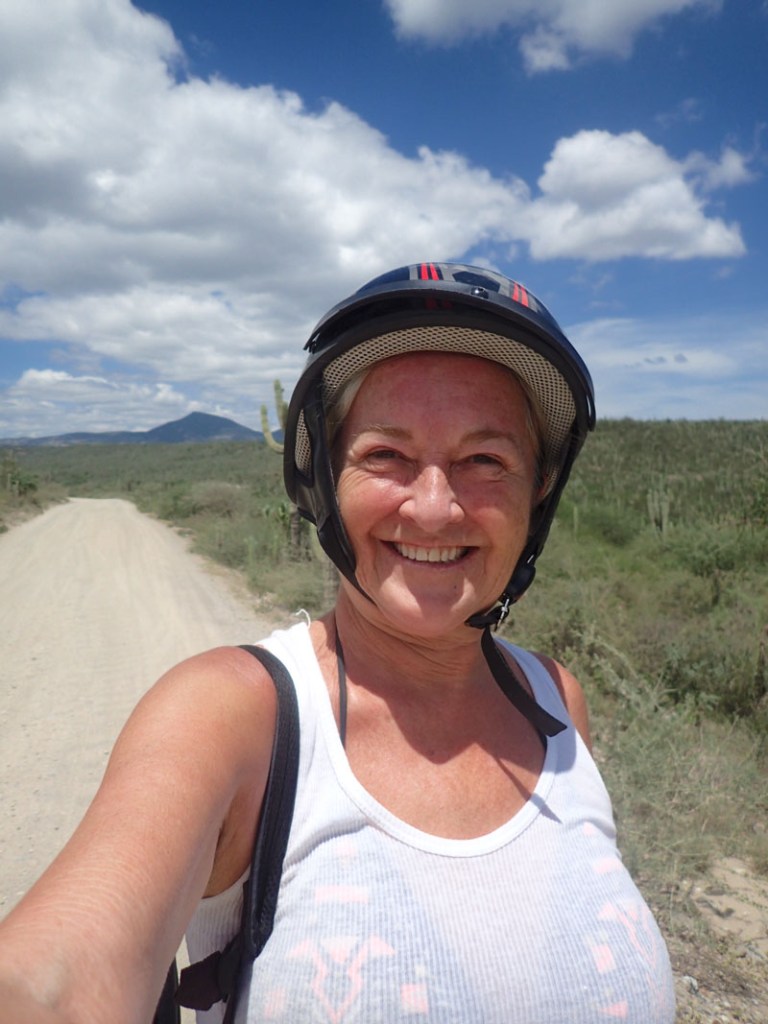
Hello my old birds! Sitting here with a big sloppy grin on my face after having finally purchased my ticket, booked a flat for the first eight days and got some Pesos in my trembling hands after two long years.
I’m very chirpy and, well, not really believing it. I’ve scraped together enough money if I starve a bit, for a month there. One week in my beloved Tulum for a little reconnaissance with old pals hopefully, and much needed beach, sun, swimming, mojitos and rest. It’s been a foul year so I really need this.

The angels approve as I don’t know if you’ve seen, but they’ve just discovered a huge ancient city in the jungle in Campeche area just ten minutes away from where I stayed in Xpuhil. This was on my road trip (bus trip) to as many sites as were open in the year of lockdown (you know what I think of that!) It was after the terribly disappointing trip to Palenque where they had closed the on site museum with all the real treasures in and herded us round a small circuit that was not very interesting to a pro like me. So a quick reminder below.
The road trip I had been on was arduous in times of plague, also frustrating and combative with a lot of over zealous officials along the way and you know what I’m like about that….
Anyway, as I was saying that straight after I made the terrifying commitment , my angels encouraged me by a new archaeological discovery very near Xpuhil, spitting distance in fact near the Valeriana Lagoon, they knew I’d bite on that bait! It means another road trip after my initial rest. Below shows how close I was last time to this huge hidden site. It’s weird thinking back that I wondered what was up that solitary road but didn’t have time to act upon it.
THE PAPERS EXPLAINING THE FIND.
Below some excerpts and the links to explain my new El Dorado in Mexico. You’ll have to look at other articles as Mexico is the new buzzword in the archaeology journals and news!
Archaeologists Discover Pyramid Built More Than 3,000 Years Ago
Science and Health Reporter
Archaeologists have revealed thousands of previously unknown ancient Maya structures in southeast Mexico, including an entire hidden city—Valeriana—with impressive pyramids, a study reports.
Many of the more than 6,600 structures identified by a study are located close to modern settlements, despite being unknown to the Mexican government and the scientific community.
The research, published in the journal Antiquity, involved an analysis of LiDAR data covering parts of Campeche state—an understudied corner of the Maya world. LiDAR, or light detection and ranging, is a remote sensing technique that can reveal hidden archaeological features in a landscape. The study supports the notion of a “populous and urban ancient Maya landscape” in the examined area.
Furthermore, the results suggest that much more evidence of urbanism is waiting to be discovered in the central Maya Lowlands—a region in the southern part of the Yucatán Peninsula, encompassing parts of present-day Guatemala, Belize and the Mexican states of Campeche and Quintana Roo. This area, characterized by its tropical forests, limestone plains and seasonal wetlands, was a core hub of the ancient Maya civilization, particularly during the Classic Period (A.D. 250 to 900).
Maya Remains in Campeche
Since at least the 1940s, archaeologists have known that the Classic period Maya transformed the rugged interior of the Mexican state of Campeche into a densely settled and extensively engineered landscape. But some areas, such as east-central Campeche, have received little attention from archaeologists, compared with other parts of the Maya Lowlands.
For the latest study, Auld-Thomas decided to focus on this “blank spot” in east-central Campeche. The team analyzed LiDAR data for a roughly 50-mile-square area of eastern Campeche that had never been examined by archaeologists before. The data had been collected by a consortium in 2013 for a different purpose: measuring and monitoring carbon in Mexico’s forests.
Click below to continue with this article:
https://www.newsweek.com/hidden-maya-city-pyramids-discovered-government-archaeology-1976245
Lost Maya city with temple pyramids and plazas discovered in Mexico
Archaeologists draw on laser mapping to find city they have named Valeriana, thought to have been founded pre-AD150
Sam JonesTue 29 Oct 2024 12.33 GMTShare
After swapping machetes and binoculars for computer screens and laser mapping, a team of researchers have stumbled on a lost Maya city of temple pyramids, enclosed plazas and a reservoir, all of which had been hidden for centuries by the Mexican jungle.
The discovery in the south-eastern Mexican state of Campeche came about after Luke Auld-Thomas, an anthropologist at Northern Arizona University, began wondering whether non-archaeological uses of the state-of-the-art laser mapping known as lidar could help shed light on the Maya world.
“For the longest time, our sample of the Maya civilisation was a couple of hundred square kilometres total,” Auld-Thomas said. “That sample was hard won by archaeologists who painstakingly walked over every square metre, hacking away at the vegetation with machetes, to see if they were standing on a pile of rocks that might have been someone’s home 1,500 years ago.”
It continues:
Although Auld-Thomas knew that it could help, he also knew it was not a cheap tool. Funders are reluctant to pay for lidar surveys in areas without obvious traces of the Maya civilisation, which reached its height between AD250 and AD900.
It occurred to the anthropologist that others may already have mapped the area for different reasons. “Scientists in ecology, forestry and civil engineering have been using lidar surveys to study some of these areas for totally separate purposes,” Auld-Thomas said. “So what if a lidar survey of this area already existed?”
He was in luck. In 2013, a forest monitoring project had undertaken a detailed lidar survey of 122 square kilometres of the area. Together with researchers from Tulane University, Mexico’s National Institute of Anthropology and History, and the University of Houston’s National Center for Airborne Laser Mapping, Auld-Thomas began analysing the survey’s data to explore 50 square miles of Campeche that had never been investigated by archaeologists.
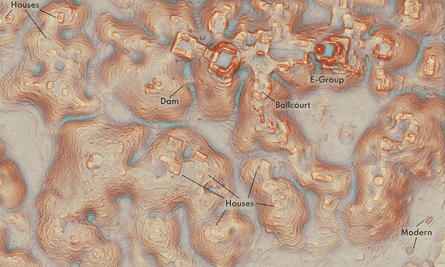
Their analysis turned up a dense and diverse range of unstudied Maya settlements, including an entire city they named Valeriana, after a nearby freshwater lagoon.
“The larger of Valeriana’s two monumental precincts has all the hallmarks of a Classic Maya political capital: multiple enclosed plazas connected by a broad causeway, temple pyramids, a ballcourt, a reservoir formed by damming an arroyo (a seasonal watercourse), and a probable … architectural arrangement that generally indicates a founding date prior to AD150,” the researchers write in their study, which is published in the journal Antiquity.
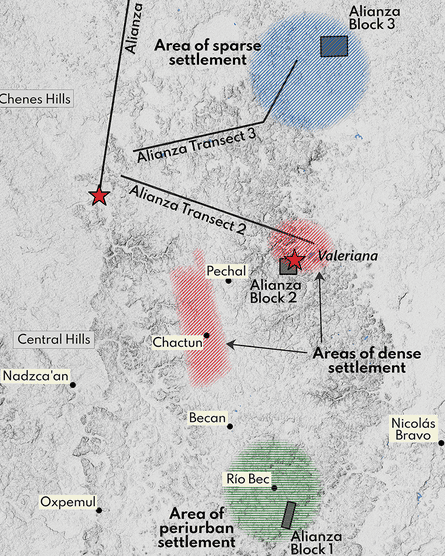
According to Auld-Thomas, the team’s findings show just how many undiscovered treasures the area could yet yield.
“We didn’t just find rural areas and smaller settlements,” he said. “We also found a large city with pyramids right next to the area’s only highway, near a town where people have been actively farming among the ruins for years. The government never knew about it, the scientific community never knew about it. That really puts an exclamation point behind the statement that no, we have not found everything, and yes, there’s a lot more to be discovered.”
The team are planning to follow up on their lidar analysis with fieldwork at the newly discovered sites, which they say could offer valuable lessons as parts of the planet deal with the demands of mass urbanisation.
“The ancient world is full of examples of cities that are completely different than the cities we have today,” Auld-Thomas said. “There were cities that were sprawling agricultural patchworks and hyper-dense; there were cities that were highly egalitarian and extremely unequal. Given the environmental and social challenges we’re facing from rapid population growth, it can only help to study ancient cities and expand our view of what urban living can look like.”
Six years ago, some of the same researchers used lidar to uncover tens of thousands of previously undetected Maya houses, buildings, defence works and pyramids in the dense jungle of Guatemala’s Petén region, suggesting that millions more people lived there than was previously thought.
The discoveries, which included industrial-sized agricultural fields and irrigation canals, were announced in 2018 by an alliance of US, European and Guatemalan archaeologists working with Guatemala’s Maya Heritage and Nature Foundation.
The study estimated that 10 million people may have lived within the Maya lowlands, meaning that huge-scale food production may have been needed.
Continue with link below:
https://www.theguardian.com/world/2024/oct/29/lost-maya-city-valeriana-mexico-temple-pyramids-plazas
So sayeth the Guardian on this new find and now onto my plans.
MY TRIP
So, I’m packing my modest trowel and going to attempt to visit this magical site after my initial week’s rest! I’m sure it’ll only be a distant glimpse but hope springs eternal! You know me I’ll give it a bash just need to check buses to see if it’s doable.

Picture this, by day me splashing around in the aquamarine salty waters of the Mayan Riviera absorbing the lovely minerals and sun and recharging my batteries. By night, having intense conversations with old acquaintances about work for me on organic farms in the cool courtyards on the main drag of Tulum, checking out the volunteer work on farms in the local parts of Yucatan and catching up with the local gossip. Then replenished, trotting off with an ADO bus to visit this new site? Not sure but something similar. How much can you squeeze in a month dammit? I also need to go swim in the magical cenotes in the area and revisit some nearby sites.
You know me enough to understand that I intend to enjoy every second of being there even if I do have to do it on the cheap. Even if I have to starve a bit and sleep in very basic places. Talking of which here’s a top tip for you on old birds cheap sleeps.
Top Tip: If you’re going cheap as an old bird you might be hesitant about hostels. I know that I am due to the weeing in the night factor and the sleep problem with strangers. Don’t despair, most hostels have solo rooms as well as dorms. Just ask or put in your filter while searching and you can find quite a few. In this way you can get a cheap night here and there and be able to cook a bit in their kitchens or prepare salads for example. I certainly will be looking to this, cheap flats too. It’s mostly the eating and drinking out for every meal that crucifies you financially. Once you got a basic home rather than a hotel you’re made. On the volunteering side you’ll need to find out if they provide tents or you need your own if that’s under offer. Otherwise it’s just if they have separate sleeping rooms. For us older birds it’s vital not to feel worried about sleeping through the night with strangers and worrying about disturbing other people by getting up in the night for the loo.

This time my packing is already underway even though it’s two weeks till I leave, I don’t have much anyway, having left most of my travel clothes in Turkiye last year! This sadly included my favourite floral skirts and summer sandals and even my cotton swimsuit. Never mind I’m going to chuck in my rags and look like Boho chic, I’ll get away with it in Tulum.

I also spring cleaned my house yesterday like a loony char lady down on my hands and knees, huffing and puffing. I was on a mission. Gone was the wan sickly old bird constantly drained, depressed and fatigued; worthy of a heroine in a Victorian novel dying tragically of TB. Here was the gutsy old bird cleaning her nest before flying to warmer, sunnier, happier climes.

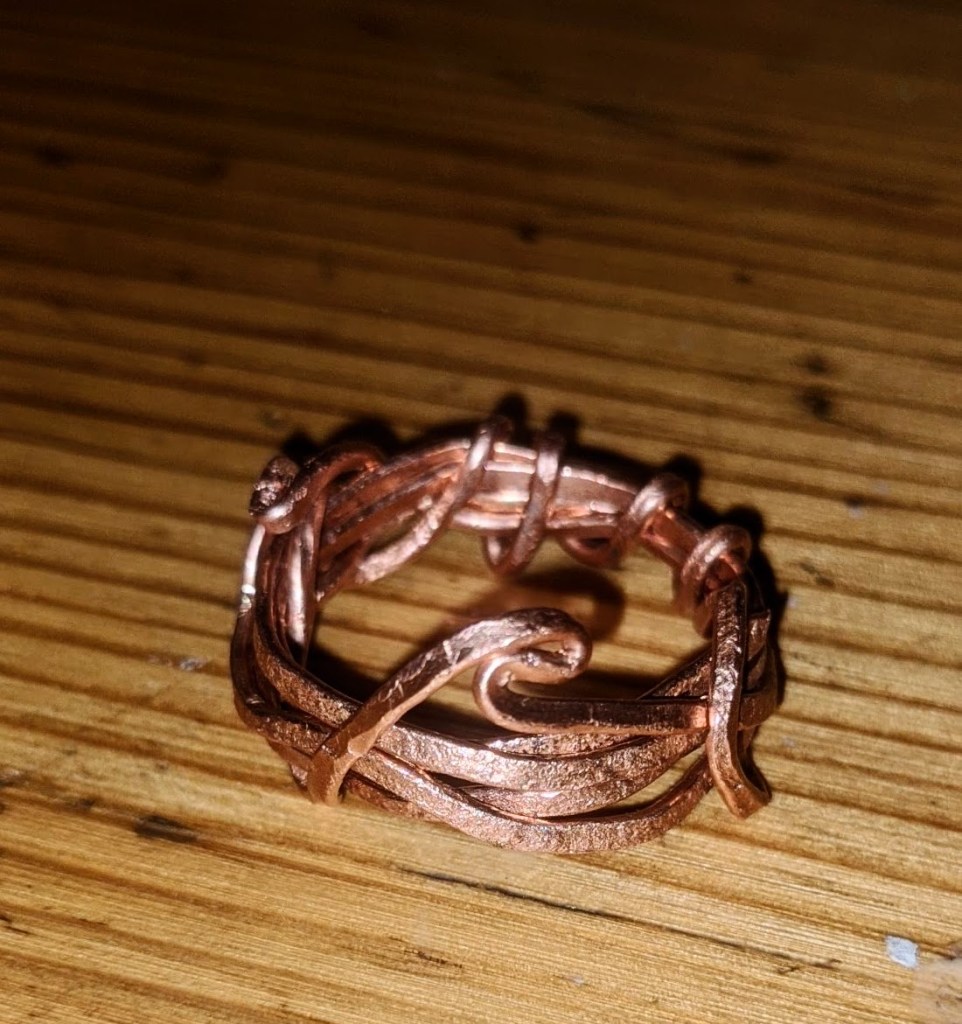
I see now that I literally froze everything this last year and was in a state of suspended animation. I wasn’t even me. Only little parts of me functioned such as going to the farmers market every Sunday and cooking good meals for one. I read a lot and went on the occasional day out to the woods, anything on the greater London area where I get free travel. I stopped however museums and galleries and social events for the most part. My own art work even suffered in my petrified brain. More recently I have been inspired to make copper rings and a friend has helped me who has a well equipped workshop.
Well I say all that but I have been writing my book too. Nearly completed Mexico section of Old Bird Travels Solo, that is after this trip.
Oh and I also painted my mates long boat in the summer! So I have done some stuff.
Oh and the lunchtime concerts every Wednesday at the reference library where I write!

Now though I am reawakening after this long terrible year and ready to get to Mexico, brush of my Spanish and start back on my life long road trip.

I’ll keep you posted
OVER AND OUT FROM AN INVINCIBLE OLD BIRD, I LOVE YOU ALL XXX

 Old Bird Travels Solo!